Travel Notes (Elements that make up a travel itinerary)

ichijoji temple
The three-storied pagoda is a national treasure.     The hanging scrolls with portraits of Prince Shotoku Taishi and Founder of Read more
valley (8)
I made the mistake of entering the valley with a lighthearted attitude, believing in the information flyer that appeared to Read more
get nice quality
In Yamanashi Prefecture, alluvial fans are formed everywhere where rivers flow from steep mountains, and fruit cultivation is popular there.  Read more
miyakonojyo
Miyakonojo is located upstream of the Oyodo River, which has its mouth in Miyazaki City, so it should be in Read more
meitsu fishing ship (1)
Meitsu Port is located halfway along the Nichinan coast.    A banner reads, "This is the port with the largest Read more
wild horses in toi cape
Kushima, which includes Cape Toi, was an enclave of the Takanabe clan (Akizuki family) in central Miyazaki Prefecture, serving as Read more

National Treasure Temples in Harima region that can be enjoyed better than Kyoto

ichijoji (1)steep stairs
ichijoji; steep stairs start

The three-storied pagoda is a national treasure.     The hanging scrolls with portraits of Prince Shotoku Taishi and Founder of Tendai sect Saicho in the treasure hall are also national treasures.    However, advance reservations are required for the latter.    After paying the entrance fee at the foot of the temple mountain, I made my way up the more than 400 stone steps to the main hall where tickets to the treasure hall are sold, keeping an eye on the three-storied pagoda on my left but caring about the reservation time at the treasure hall.   Then, I paid the ticket to the treasure hall to the monk at the main hall, and he told me that the treasure hall was down the stone steps and next to the entrance!    Why aren’t they sold at the entrance?    Seeing the disappointed look on my face, the monk told me that I could take my time to see the main hall and then visit the treasure hall on my way home.     I’m thankful for that, but I’m starting to wonder why.

ichijoji (3)main hall
ichijoji;  still stone steps to main hall

From the main hall, you can look down on the three-storied pagoda standing dignified in the middle of a dense mountain, and the gentle breeze is refreshing.

On the side wall of the main hall, I found large letters that looked like they had been scrawled in ink.    They are nice letters, but the content doesn’t seem to have anything to do with the temple.    Later, when I stopped by Jodoji Temple (see next post) and saw almost the same on display, I realized that it was a doodle made by someone who had visited the temple at the time.    Although it’s common in any era, it’s still a bold doodle.

ichijoji (6)
ichijoji  pagoda

Well, I took my time touring the main hall and the three-storied pagoda, and finally stopped at the treasure hall on my way back, but it didn’t have a particularly strict entrance, and I was told that I could come in freely, which made me feel strange.  There were various Buddhist statues from that time, and at the very back there were portraits of Shotoku Taishi and Saicho, but they were so sharp that I wondered, and when I read the description, it turned out to be an exquisite reproduction.    Real national treasures are stored in museums, right?     If that’s the case, what’s the point of requiring advance reservations, and of not selling tickets until you’re on top of the mountain?

It’s a temple full of questions, but at least it’s better than the crowded and uncomfortable temples in Kyoto.


sun flower field
go back to itinerary


Don’t believe the time required on the Ojira River Valley flyer

valley (1)suspention bridge as entrance

I made the mistake of entering the valley with a lighthearted attitude, believing in the information flyer that appeared to be a flat road running along the valley with an appropriate time required, hoping to feel the natural cooling effect of the valley during the hot summer.   At the entrance to the valley, a suspension bridge with a sign that says max 5 people are allowed invites a sense of adventure, but all we pass are children in swimsuits with floats.    Apparently, the waterfall basin (Senga-Fuchi) at the very entrance of the valley had been turned into an improvised pool.   The bright green waterfall basin looks like it has been filled with bath salts, and if you miss your chance to take a photo, it will be crowded with people.

valley (2)from bridge

Since it was a valley with so many small children around, I saw a flyer that said it would take 35 minutes to get to the next stop (Asahi-Fall), so I headed deeper into the valley, thinking it would be a nice walk.   After that, I could no longer hear the sounds of children playing, and after 35 minutes of climbing up a steep mountain path that took a long detour to get over a waterfall with steps, and climbing up and down chains and iron ladders, I finally arrived at Asahi fall after 50 minutes.     I’m already drenched in sweat, my throat is parched, and my legs are tired.   However, there was no signboard for the waypoint mentioned in the flyer, and after walking up the mountain road for another 20 minutes, there was a signboard (Asahi-Fall) for the waypoint.    The flyer said it would take 35 minutes, but it actually took 70 minutes.   After that, I continued walking faster and faster until I reached the turnaround point (Jinja-Fall), but I still couldn’t get there in the time specified in the flyer.    Normally, I think the time written on such flyers is written with sufficient margin, but don’t believe the time required on the flyer for Ojira River Valley.

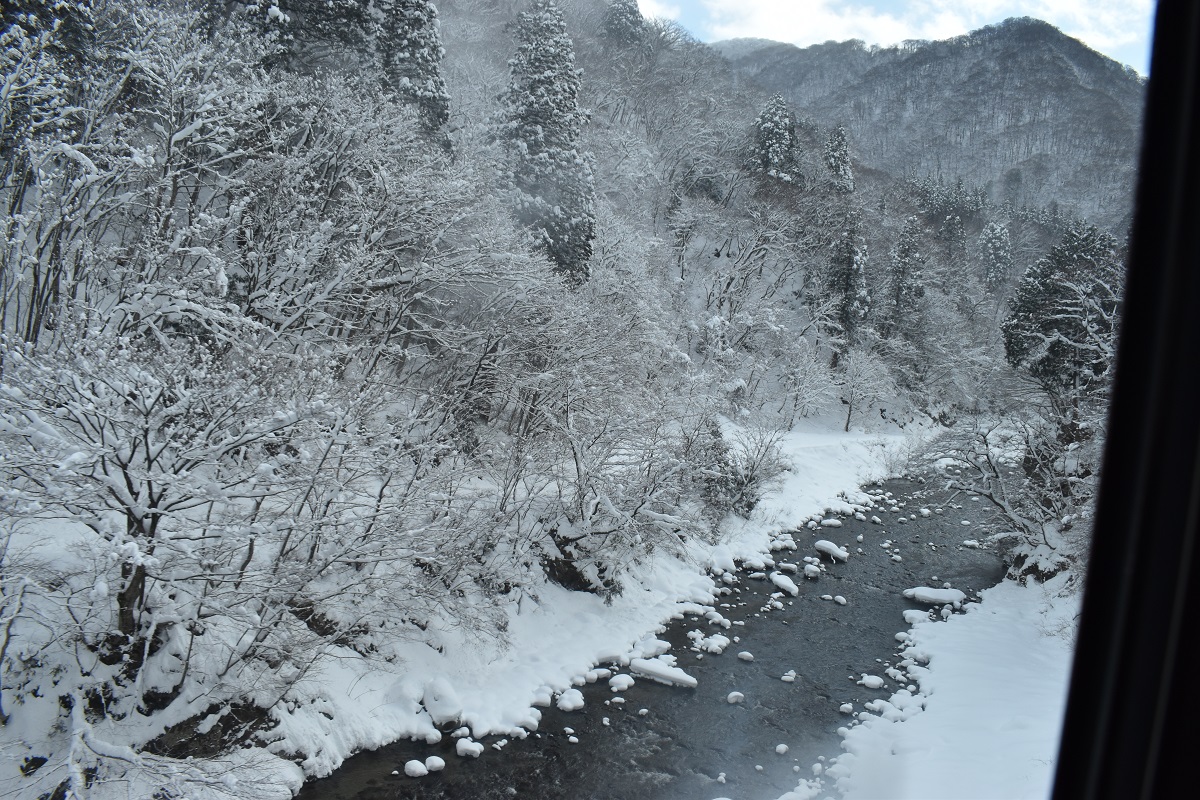
I was only complaining about the time required on the flyer, but the valley itself is full of large white granite rocks, their whiteness is dazzling, and the clear water is flowing everywhere, making it refreshing.    My clothes are soaked with sweat, which is the exact opposite.    The ridge path on the way back was relatively flat, and we stayed on time here.    In the end, it took about 3 hours to turn around at the turnaround point.

jissoji2
go back to itinerary


People in the know line up to buy outlet peaches

In Yamanashi Prefecture, alluvial fans are formed everywhere where rivers flow from steep mountains, and fruit cultivation is popular there.   Hokuto City and Nirasaki City are famous for producing peaches, and the peach blossoms, which bloom a little earlier than the cherry blossoms, are enchanting.

peach orchard
peach orchard
order card
order card

If you can, visit in early summer and buy outlet peaches in bulk at a bargain price.   At JA(Japan Agricultural Cooperatives) Rihoku, there are several yards (common selection yards) where peaches brought in from producers are sorted and shipped, but peaches that are not of standard quality and are not shipped to the market (this is called “Hangedashi”,meaning out of standard) are sold directly to consumers here.   The taste is the same, except that it cannot be shipped to the market due to serious reasons such as a slight scratch on the appearance or a slight problem with the color of the surface.    They could be normally displayed in European markets.   One box of about 20 pieces costs 2,200 yen.    People from neighboring prefectures have been lining up for this event since early morning.    In my case, I was late in the morning, so I arrived at 9am and my ticket number was 64.

The system is such that producers bring the peaches they harvested on the day to the common selection yard, sort them, and when the “Hangedashi” boxes are made, people who have tickets are called in turn.    I was nervous, but finally, at 11:30, I was called and was able to get a top quality item.   Please note that even if you have a numbered ticket, if you are not careful, there are some people, especially elderly people, who will cross your path, so even though there is shade, you will have to wait in line when it is near your turn.

stand in line
stand in line

Everyone was looking for the big box, and I witnessed people with ticket numbers far behind the turn snatching up unpopular small boxes.   There were also several large fans installed for people waiting outside in the hot weather, but you should be careful as there are times when large ladies occupy the space in front of the rotating fans.

out of selection for juice

When I spoke to the sorting guy who was waiting for the peaches to be brought in, he said that if the sugar content is high, some parts of the peaches will become bitter due to the hot afternoon sun, so they are removed from even though the “Hanedashi” peaches and they are washed in a special washing machine, and apparently processed into juice after the bitter part is removed.

It is said that peaches will not last long in the hot summer unless they are not only sweet but also sour.   By the way, if you buy peaches in bulk and still hard, they will last longer if you store them in the back of the refrigerator compartment  where the temperature does not change much.    If you take it out 2-3 days before eating, it will become softer and more sweet.

While I was waiting there, I visited the shrine adjacent to the yard, which has a long history with military commander, Takeda Shingen.    It looked like the red helmets of the Takeda army.

Detour

konseiken1
konseiken1

Kinseiken, a long-established Shingen mochi(rice cake) shop, only sells Water Shingen mochi on weekends from June to September.   This summer water confectionery is made by trapping the delicious water of the valley in agar that has been reduced to an absolute minimum, making it fluffy, and eating it with soybean flour and black sugar syrup, but it dissolves quickly, so it can only be eaten locally.   It’s like drinking delicious water. The stores are located in Nirasaki and Daigahara-shukuba.    The Daigahara store is located in front of Sake Brewery Shichiken.

konseiken2
konseiken2


jissoji2
go back to itinerary


Miyakonojo is completely flat

Miyakonojo is located upstream of the Oyodo River, which has its mouth in Miyazaki City, so it should be in a basin, but when you look at the map, it’s too flat to be called a basin.    Since it was cherry blossom season, I went to the observatory of Mochio Shrine to see the row of cherry blossom trees that were selected as one of the top 100 cherry blossom trees.   If I go to a shrine on a hill just to get a view, I will might be punished, so after praying at the shrine, I tried to go to the observation deck and noticed that there was a group of megaliths behind the shrine.    I could feel an inexplicable spirit.    Trembling, I proceed to the observation deck.

From the observation deck, you can get a good view of the completely flat Miyakonojo.    I have never seen such flat land.    There is an explanation that it was a lake in ancient times, and was flattened by pyroclastic flows from the Aira Caldera in Kagoshima next to Miyakonojo.   I had often heard on the news that avian influenza had broken out in Miyakonojo and the chickens at the poultry farm had to be culled, and I thought that the area was so flat that migratory birds would also land there.    I came to see the row of cherry blossom trees from the observation deck, but my attention was drawn to the vast, flat basin.

west coast (1)
go back to itinerary

Kochi is not home to the largest catch of skipjack tuna in Japan by pole-and-line fishing

Meitsu Port is located halfway along the Nichinan coast.    A banner reads, “This is the port with the largest catch amount  of skipjack tuna in Japan using the pole-and-line fishing method.”   Fishing begins at the end of February, and the lively bonito that arrive on the Kuroshio Current are traded at the fishing port market ahead of the rest of the country.    It is said that a wide variety of fish are landed each season.   At the port, boats with many fishing rods are preparing for tomorrow’s fishing trip.

The restaurant at the portside station Meitsu opens at 10:30, but people start writing their names in the reservation book before then.    There were clearly more locals than tourists waiting for their turn.

What you order here is a set meal of bonito marinated in soy sauce and grilled over charcoal by yourself.    At the end, you ask for green tea and served it with bonito and rice.   This is the only place where you can enjoy bonito dishes while looking out at the port where they are caught and landed.

I bought bonito flakes as a souvenir at a portside station, but when I got home and took a closer look, it turned out to be from Makurazaki, Kagoshima Prefecture, and not even from Kochi.

Detour

Lion Rock is located in the open sea of ​​Aburatsu fishing port.    If you approach it from the south, it looks like a lion’s profile, but if you approach it from the north, most people will miss it.

west coast (1)
go back to itinerary

Continue reading “Kochi is not home to the largest catch of skipjack tuna in Japan by pole-and-line fishing”

The wild horses of Cape Toi are always eating or scratching their necks

Kushima, which includes Cape Toi, was an enclave of the Takanabe clan (Akizuki family) in central Miyazaki Prefecture, serving as a buffer zone between the Satsuma clan (Shimadzu family) and Obi clan (Ito family), who had a grudge against each other during Edo period.   Even now, locals don’t seem to think of the Akizuki family very well, as they were one of the families who betrayed their allies in the Battle of Sekigahara, so the guide explained this part in hushed tones.

Since ancient times, this area has been breeding horses and supplying them to various regions as warhorses and agricultural horses to earn foreign currency.  After the Meiji Restoration, they have been protected in a wild state without human intervention.    The only things humans do are maintain water fountains and fences, burn the fields (apparently horses can’t chew if the grass is long), and conduct annual health checks and check on the number of horses.    Horses used to have numbers branded on their legs, but now using a method called frostbite branding, only white hair grows over the numbers.   I was very convinced when I heard that once the pigment is gone, only gray hair will grow again, similar to how we only grow gray hair as we get older.

Breeding is managed by leaving it to nature, so even if many foals are born in the spring (it is called “harukoma”), only a few born in early spring when the season is good will survive.   It is said that foals born during the rainy season will die if their mothers do not protect them from the rain because their body temperature will drop due to the rain.   In order to preserve their wild state, humans do not dare to help them with their fate.

In addition, young stallions make up a harem, and drinking water among them is determined by seniority.    The question arises as to what happens to other stallions, but it makes sense that stallions only come into heat at a certain age, while females come into heat at any age.   In other words, a stallion that is no longer in heat will leave the harem and form a herd with young stallions that are not in heat.    It is said that when young stallions are in heat, they will approach females even as old as their mothers and leave the male herd.

When horses stand still, they are either paying attention to their surroundings or are sleeping.    Therefore, it is dangerous to approach them at times like this.   When they get excited, they kick or run, but they usually spend most of their time either eating grass, or pressing their necks against the fence to scratch themselves because the insects around their necks are itchy.   Unlike cows, which eat the same grass, horses only have one stomach, so they defecate every two hours to keep their bodies from getting too heavy so that they can run when they sense danger.   Therefore, there is feces all over the meadow, but it doesn’t really smell because it hasn’t fermented in the intestines, and many people step on it without even realizing it.    We often see pictures of horses raising their heads and running, but this is not a normal situation for a horse, but an emergency situation for the horse.

All of the above is based on the guide’s explanation.    As I asked for a guide and observed the horses, I realized that there was so much I didn’t know. Instead of just staring at the horses and taking close-up photos of just the two of you and a horse without worrying about the risks, please ask for a guide.

Typical of regular horse-related tourism

Yabusame in Tono City and horseback hockey in Hachinohe City show the close relationship between horses and people.    On the other hand, the wild horses of Cape Toi can be observed in their completely natural state, offering new discoveries never seen before in tourism.

west coast (1)
go back to itinerary